Receiving hundreds of applications for a single job is a great sign, but analyzing them manually is a massive bottleneck. See how intelligent screening transforms stacks of resumes into a clear ranking of the best professionals for your company.
The manual screening bottleneck
One of the biggest challenges for HR professionals is the time spent reading resumes. Often, dozens or hundreds of candidates apply for a position, but only a small fraction actually meet the minimum necessary requirements.
Reading each document manually is not only exhausting, but it also increases the chance of human error, where an excellent talent might slip by unnoticed due to visual fatigue or confusing resume formatting.
How HRelper's AI solves this?
Our Artificial Intelligence technology takes over the heavy lifting of initial screening. When a candidate applies, the system instantly reads the resume, cross-references experiences and skills, and compares this data directly against your job description.
The result is a precise adherence ranking. You do not just get a list of names; you get a clear score showing how well that candidate fits the technical and behavioral requirements demanded for the role.
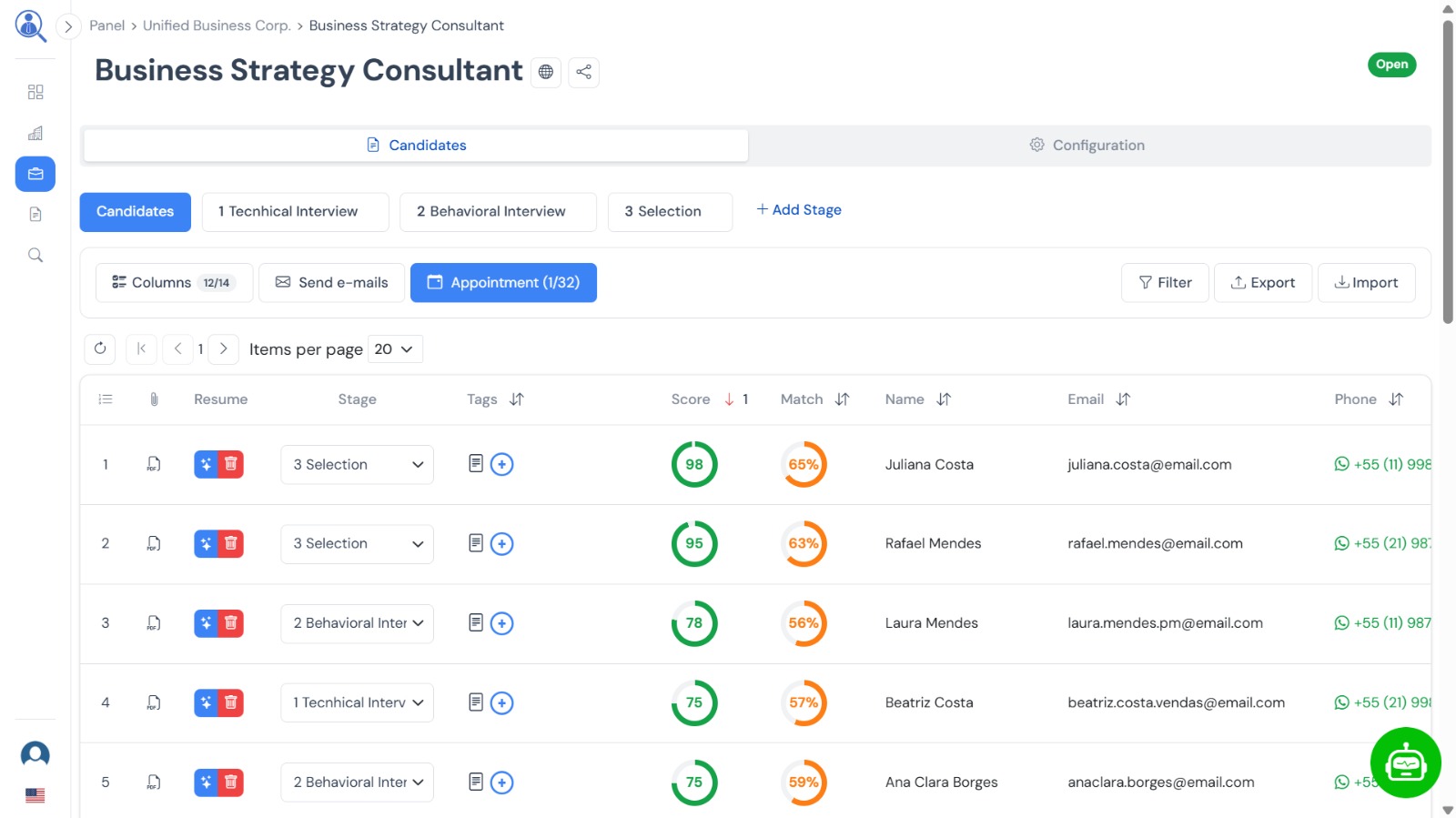
Fast and data-driven decisions
Beyond the fit score, HRelper generates an automatic summary highlighting the strengths and potential gaps of each candidate in relation to the specific job.
This means that you and the hiring managers go into the first conversation knowing exactly what needs to be explored, basing the interview on structured data rather than just intuition.
Focus on what matters: the people
By accelerating the initial screening, your HR team gains valuable hours to invest in improving the candidate experience and conducting much deeper interviews. Technology does not replace human contact; it empowers it.